How to Choose the Best Shop Signs for Your Business?
Choosing the right shop signs is crucial for business visibility and branding. According to a report by the International Sign Association, effective signage can boost sales by up to 20%. This highlights the importance of making informed choices when selecting shop signs.
Industry expert Mark Thompson emphasizes, “Your sign is the first impression customers get. Make it count.” This insight underscores the necessity of aligning shop signs with your brand identity. Customers often make split-second decisions based on signage, so clarity and design are paramount.
A well-designed sign conveys professionalism and attracts foot traffic. Yet, many businesses overlook the impact of shop signs. Taking the time to assess factors like location, design, and materials can lead to significant advantages. Authenticity in your signage connects your business with customers, creating lasting impressions.
Understanding the Importance of Shop Signs for Your Business
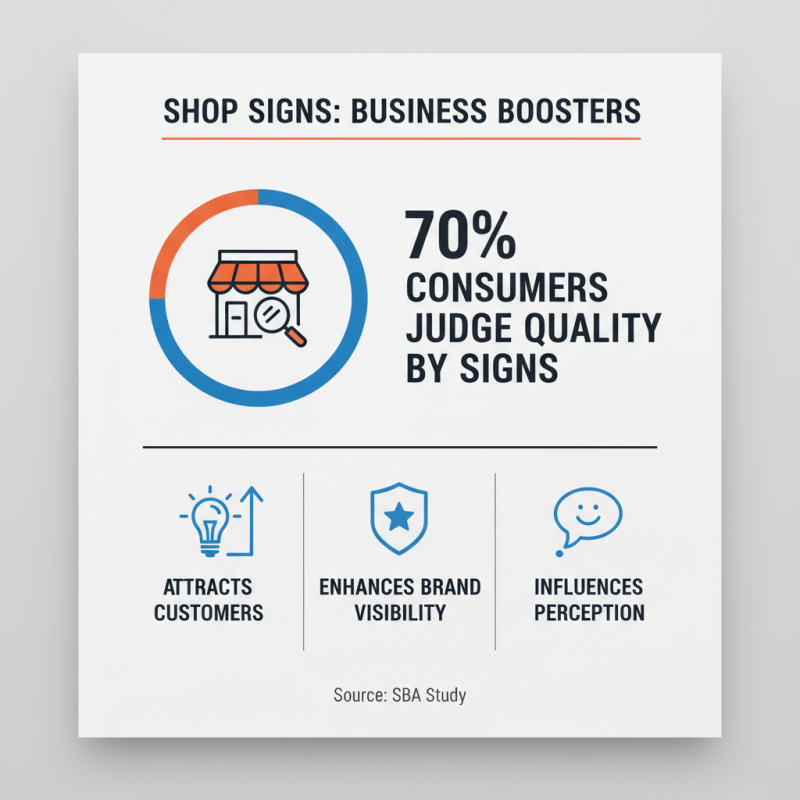
Shop signs play a crucial role in attracting customers to a business. According to a study by the Small Business Administration, over 70% of consumers believe that signage reflects the quality of a business. This demonstrates how signs not only inform but also influence perceptions. Effective signage can enhance brand visibility, making it essential to choose the right type and design.
The power of shop signs is backed by data, revealing that businesses with effective signage experience an increase in sales. According to a report from the Sign Research Foundation, well-designed signage can boost revenue by up to 20%. However, it's easy to overlook the importance of location and legibility. A poorly placed or confusing sign can deter potential customers. Taking time to assess the design, materials, and placement is critical for maximizing impact.
Signage should also resonate with your target audience. What draws one group may not appeal to another. This often requires market research, and some businesses neglect this step. Despite having a visually appealing sign, it may not effectively communicate the brand message. Regularly evaluating and refining signage strategies is essential for long-term success. A commitment to quality and relevance in signage can lead to stronger customer connections.
Identifying Your Brand Identity and Message
When choosing shop signs, recognizing your brand identity is key. A study by the Sign Research Foundation states that about 68% of customers believe a business’s signage reflects its quality. This highlights the importance of a clear and effective message. Signs must convey what makes your business unique. Use colors, fonts, and imagery that resonate with your brand.
Your message should be simple yet impactful. Research shows that businesses with clear signage see a 20-50% increase in sales. Keep in mind that less is often more. Complicated messages can confuse potential customers. Instead, focus on a few strong words or an image that encapsulates your brand’s essence.
However, creating impactful signs doesn’t come without challenges. Many businesses overlook the significance of location and visibility. Signs need to be readable from a distance and in various lighting conditions. Gathering feedback from potential customers can provide valuable insights into how your signage is perceived. Experimentation may be necessary, as what works for one business may not resonate with another. Adaptability is crucial, and continuous evaluation can improve your brand message over time.
Sales Performance of Different Shop Sign Types
Choosing the Right Material and Design for Durability
When selecting the best material for shop signs, durability is key. Consider the environment. Will your sign face harsh weather conditions? Materials like aluminum or acrylic can withstand elements better than others. They resist fading, rusting, and corrosion.
Tips: Look for UV-resistant coatings. They protect colors from fading over time. Lightweight materials are easier to install but may not be as durable. Balance weight and resilience based on your location and expected sign life.
Design also matters. A well-thought-out design ensures visibility and impact. Fonts should be legible from a distance. Color contrast enhances readability, making your sign stand out. However, avoid overcrowding the design with too much text or images. Simple can be powerful.
Tips: Test designs digitally before finalizing. You want a look that resonates with your audience but also reflects your brand identity. Sometimes, less is more. Reflect on what message you want your sign to convey effectively.
Selecting the Appropriate Size and Placement for Visibility
Selecting the right size and placement for shop signs is crucial for visibility. According to a survey by the Sign Research Foundation, nearly 76% of consumers enter a store based on its signs alone. The right sign can significantly increase foot traffic. Signs should be large enough to be read from a distance. The recommended height is at least 7 feet above ground level.
Placement plays a vital role in visibility. A sign should be located in areas where potential customers can’t miss it. For example, placing signs at intersections or along busy streets enhances visibility. A 2019 survey found that businesses see a 20-50% increase in sales when they improve signage. This highlights the importance of strategic placement.
Lighting is another factor that impacts visibility. An illuminated sign catches attention, especially at night. Consider local regulations when choosing lighting options. Reflective materials can also enhance daytime visibility. It's essential to assess how the sign looks in various conditions. Imperfections in design can affect perception. Regularly evaluating the sign's effectiveness can lead to improvements. Taking these aspects into account will help maximize your shop sign's impact.
Compliance with Local Regulations and Permits for Shop Signs
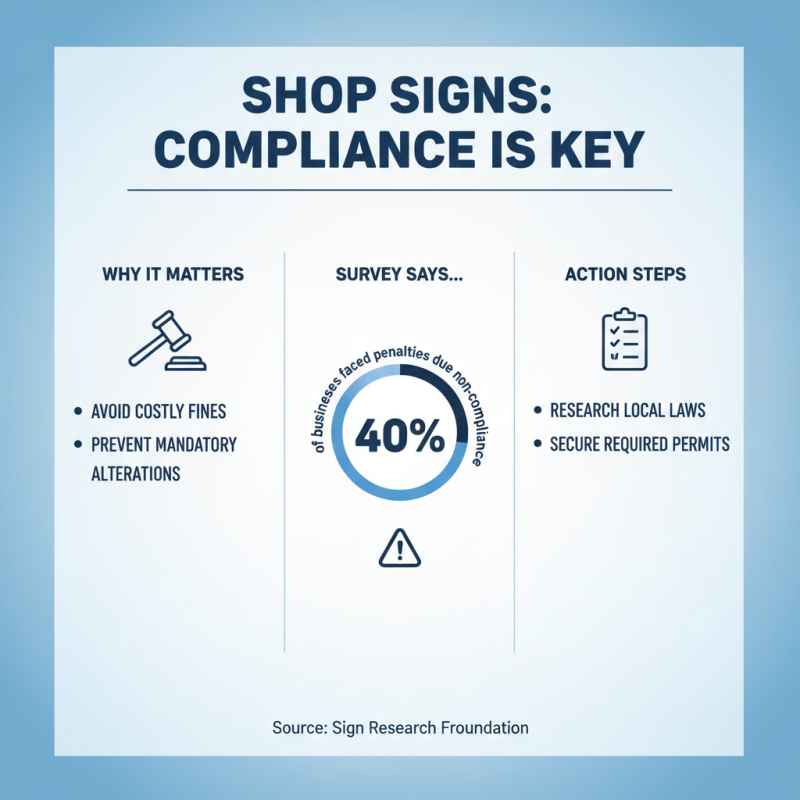
When selecting shop signs, adhering to local regulations is crucial. Many businesses overlook this aspect, which can lead to costly fines or the need for alterations. In fact, a survey by the Sign Research Foundation revealed that nearly 40% of businesses faced penalties due to non-compliance with signage regulations.
Understanding zoning laws is a critical first step. These laws can dictate the size, location, and even the type of signage allowed in your area. For instance, some municipalities restrict lighted signs during nighttime, while others may limit the height of signs. Failing to recognize these rules can result in wasted investment and disappointment.
Obtaining necessary permits is another critical consideration. Local authorities may require permits for signage installation. The process can be time-consuming and complex. According to the International Sign Association, obtaining the proper permits can delay the installation by an average of four to six weeks. Businesses should proactively engage with their local planning department to avoid any unexpected hurdles during implementation. By prioritizing these compliance aspects, businesses can ensure that their signage is effective and legally sound.