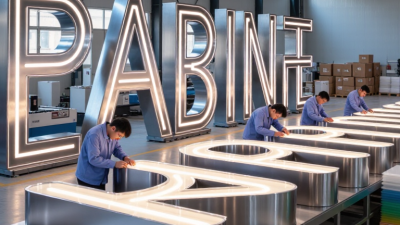
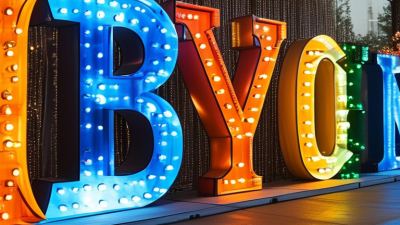
A strong Logo Signage program can shape how customers judge a business before entering its premises. The sign must survive sunlight, rain, transport, and changing brand guidelines. It must also remain readable from the road, not only in a design presentation.
The global digital signage market reached approximately USD 27.1 billion in 2023, according to Grand View Research. Its report forecasts continued growth through 2030, driven by retail, hospitality, healthcare, and transportation applications. The International Sign Association’s research also shows that on-premise signs can influence customer awareness and business visibility. These figures explain why global buyers now examine more than factory prices. They compare LED life, aluminum thickness, acrylic clarity, IP ratings, installation support, packaging, and certification documentation.
As identity designer David Airey writes, “A logo is not a brand—it is a graphic representation of a brand.” That distinction matters when a logo becomes a physical sign. A poorly controlled color match can look acceptable on screen but appear dull under cool-white LEDs. An uneven halo can weaken a premium storefront. Small details become public evidence of manufacturing quality.
This guide reviews ten Logo Signage manufacturers for international buyers. The comparison considers customization, production experience, material consistency, export capability, lead times, after-sales support, and compliance practices. No ranking is flawless. Supplier claims still require verification through drawings, samples, factory audits, and recent project references. That extra work may feel slow. It often prevents expensive rework, damaged shipments, and disappointing installations.
A suitable logo signage manufacturer must handle more than attractive design. Global buyers need repeatable quality, export experience, and clear technical communication. Grand View Research estimated the digital signage market at about USD 27.7 billion in 2023, with continued growth through 2030. That expansion raises competition, but it does not guarantee reliable production.
Ask for material samples, installation drawings, wiring details, and a documented quality-control process. A serious manufacturer should explain aluminum grades, acrylic thickness, LED color temperature, ingress protection, and power requirements. Packaging also matters. A fragile illuminated sign may travel thousands of kilometers before installation. Check carton testing, spare parts, labeling, and damage-claim procedures. Small details matter.
Certifications must match the destination, not merely the factory’s location. Buyers should request electrical test reports, material declarations, and evidence of responsible sourcing where applicable. The International Energy Agency reported that LED lighting uses substantially less energy than traditional lighting, so efficient components can reduce operating costs. Still, energy claims need measurable specifications. “Eco-friendly” is too vague.
Lead time should include production, inspection, and shipping buffers. Confirm warranty coverage in writing. Ask who answers technical questions after delivery. A polished catalog is not proof. I would inspect an installed project or order a prototype first. That step costs more, but it can expose uneven brightness, poor color matching, or weak mounting points before a larger order. No manufacturer gets everything perfect. Transparent correction matters.
10 Best Logo Signage Manufacturers for Global Buyers?
How to Evaluate Materials, Design, and Manufacturing Capabilities
Material selection should match the installation environment, not just the visual concept. Aluminum offers low weight and reliable corrosion resistance for exterior signs. Stainless steel creates a refined finish but increases weight and fabrication cost. Acrylic can produce bright, clean lettering, although it may scratch during transport. Ask for finish samples, thickness data, and outdoor exposure results. No material is perfect.
Design quality depends on more than attractive drawings. Check viewing distance, letter depth, lighting uniformity, mounting access, and cable routing. A strong manufacturer should provide scaled drawings and realistic illumination tests. Examine corners closely. Sharp edges, uneven gaps, or visible fasteners often reveal weak production control. A design may look impressive on screen but fail during installation. That happens.
Manufacturing capability is best judged through evidence. Request production photos, inspection records, packaging methods, and a sample approval process. Confirm whether the factory controls cutting, welding, coating, assembly, and electrical testing internally. Ask how it manages color variation between batches. Tolerances should be written, not implied. Reliable suppliers also explain lead times honestly and identify risks early. I would still inspect a pre-production sample, even after reviewing excellent drawings. Small changes in lighting, surface texture, or mounting hardware can affect the final result more than expected.
10 Best Logo Signage Manufacturers for Global Buyers
For international projects, the ten leading logo signage manufacturers should be judged by repeatable quality, not impressive brochures. Grand View Research estimated the global digital signage market at approximately USD 27 billion in 2023, with continued growth through 2030. This expansion increases demand for illuminated logos, architectural letters, and weather-resistant display systems. A dependable manufacturer should provide engineering drawings, material samples, photometric data, and clear installation instructions before production begins.
Look for controlled aluminum fabrication, stable color matching, and tested LED performance. Outdoor projects require sealed housings, drainage planning, and suitable ingress protection ratings. Regional electrical requirements also matter. The International Sign Association emphasizes safety, permitting, and professional installation across sign projects. Manufacturers serving multiple countries should therefore maintain traceable quality records and adapt documentation to local authorities. Ask about replacement modules, packaging tests, and after-sales response times. Small details create fewer surprises.
Cost alone is a weak filter. A low quotation may exclude molds, customs paperwork, structural calculations, or site coordination. I would also question rankings that rely only on online reviews. They rarely show long-term brightness loss or installation failures. A practical shortlist should compare lead time, warranty terms, sample approval, factory inspection access, and experience with multi-site rollouts. Not every supplier will excel in every region. That is acceptable. Transparent limitations are often more valuable than polished promises.
| No. | Anonymous Manufacturer Profile | Primary Logo Signage Capability | Common Materials | Typical Project Scale | Illumination Options | Relevant Quality or Safety Requirements | Suitable International Buyer |
|---|---|---|---|---|---|---|---|
| 01 | Profile A — Custom Fabricated Sign Specialist | Built-up channel letters, dimensional logos, reception signs and exterior wall signs | Aluminium, stainless steel, acrylic, polycarbonate and painted metal | Single-site installations to multi-location rollouts | Front-lit, halo-lit, edge-lit and non-illuminated | Electrical safety review, ingress protection assessment and documented material specifications | Retail, hospitality, offices and commercial property developers |
| 02 | Profile B — Stainless-Steel Logo Manufacturer | Premium metal letters, brushed finishes, mirror-polished logos and lobby branding | 304 stainless steel, 316 stainless steel, aluminium and acrylic | Medium to large architectural identity projects | Halo-lit, front-lit, face-lit and unlit metalwork | Corrosion-resistance selection, weld quality control and surface-finish inspection | Corporate headquarters, airports, hotels and high-end commercial interiors |
| 03 | Profile C — LED Illuminated Sign Producer | Energy-efficient illuminated letters, lightboxes and exterior logo signs | Aluminium, acrylic, polycarbonate, translucent vinyl and LED modules | Storefront programs and repeated international retail projects | LED modules, LED strips, front illumination and halo illumination | Electrical ratings, transformer compatibility, thermal management and service access | Retail chains, service networks and branded environments |
| 04 | Profile D — Large-Format Exterior Sign Manufacturer | Building-mounted logos, freestanding signs, monument signs and pylons | Aluminium, galvanized steel, structural steel, acrylic and composite panels | Large campuses, shopping centres and infrastructure projects | Internal LED illumination, external lighting and non-illuminated construction | Structural calculations, wind-load review, anchoring design and local permitting | Developers, industrial sites, campuses and public-facing facilities |
| 05 | Profile E — Acrylic and Plastic Letter Specialist | Lightweight dimensional logos, indoor signs and cost-efficient illuminated letters | Cast acrylic, extruded acrylic, PVC, polycarbonate and aluminium returns | Small to medium commercial projects with repeatable designs | Front-lit, backlit and internally illuminated | UV-resistance specification, flame-performance requirements and dimensional accuracy | Retail interiors, restaurants, offices and exhibition spaces |
| 06 | Profile F — Architectural Metal Sign Fabricator | Precision-cut metal logos, engraved panels, plaques and wayfinding systems | Aluminium, brass, bronze, stainless steel and powder-coated steel | Architectural interiors and premium exterior developments | Usually non-illuminated, with optional concealed lighting | Finish consistency, alloy identification, coating thickness and installation tolerances | Architects, contractors, museums and premium hospitality projects |
| 07 | Profile G — Multi-Site Rollout Manufacturer | Standardized logo signage, packaging control and repeat production | Aluminium, acrylic, steel, vinyl graphics and composite panels | Dozens to hundreds of locations using approved specifications | Illuminated and non-illuminated formats based on site requirements | Drawing revision control, colour matching, inspection records and installation manuals | International retailers, franchise networks and corporate property portfolios |
| 08 | Profile H — Sustainable Signage Manufacturer | Low-energy LED signs, repairable structures and material-efficient logo systems | Recyclable aluminium, stainless steel, acrylic and low-impact coatings | Commercial projects with environmental procurement requirements | Low-voltage LED, daylight-visible graphics and non-illuminated signs | Energy-use documentation, recyclable material declarations and responsible packaging | Green buildings, public institutions and environmentally focused developers |
| 09 | Profile I — Design-to-Installation Project Partner | Site surveys, shop drawings, fabrication, logistics and installation coordination | Metal, acrylic, composite panels, glass and LED components | Turnkey projects requiring coordination across several countries | Project-specific combinations of illuminated and non-illuminated signs | Method statements, installation risk assessments, technical drawings and handover records | Main contractors, design agencies and international project managers |
| 10 | Profile J — Export-Focused OEM Sign Manufacturer | Private-label production, custom packaging and documentation for overseas buyers | Aluminium, stainless steel, acrylic, LED systems and protective packaging materials | Containerized orders, distributor programs and recurring OEM supply | Front-lit, halo-lit, edge-lit and non-illuminated options | Export packing, product labelling, wiring documentation and pre-shipment inspection | Distributors, sign contractors, procurement companies and overseas resellers |
Note: International buyers should verify project drawings, local electrical regulations, wind-load requirements, installation permissions, material specifications and third-party test documents before placing an order.
Choosing among the 10 best logo signage manufacturers requires more than comparing headline prices. Request an itemized quotation showing materials, tooling, artwork revisions, packaging, freight, and applicable taxes. A quote that is 15% cheaper may exclude installation hardware or protective crates. Ask for a physical sample, not only digital renders. Check acrylic edges, metal thickness, paint consistency, LED brightness, and color matching under daylight.
Quality claims should be supported by evidence. Request recent inspection photos, production records, and test reports for electrical components. Certifications such as ISO 9001 can indicate process control, but they do not guarantee perfect signage. Confirm whether certificates apply to the factory, product, or a specific market. Requirements may vary by destination. This detail is easy to overlook.
Lead time needs a written production schedule. Separate artwork approval, sampling, manufacturing, inspection, and shipping. Reliable suppliers explain their capacity during peak seasons and provide a realistic buffer. Ask what happens when a sample fails inspection. A replacement plan matters. In my experience, clear communication often predicts fewer delays than a polished sales presentation. Still, no supplier is flawless. A factory may meet its promised date but deliver inconsistent color across batches. Build approval checkpoints into the purchase order, and keep photos, measurements, and signed specifications. Small omissions become expensive later.
Choosing the right logo signage supplier begins with evidence, not attractive mockups. A 2023 Sign Research Foundation report highlights how visibility, readability, and placement influence customer recognition. Ask suppliers for measured brightness, viewing-distance tests, material samples, and installation photographs. A confident supplier should explain acrylic thickness, metal finish, lighting temperature, and weather resistance in plain language. Vague promises are warning signs.
The supplier must also protect consistency across locations. Request a color-matching process using approved color references, not phone-screen images. Check production tolerances, packaging methods, replacement policies, and project records. The International Organization for Standardization reported more than one million valid quality-management certificates globally in its 2023 survey. Certification does not guarantee perfect signage. It does show whether processes receive formal control. I once underestimated installation access. The sign looked excellent, but limited equipment access increased site work and delays. That mistake still matters.
Tips: Compare at least three written quotations. Require a full-size material sample. Confirm artwork ownership and revision limits. Ask who handles damaged parts. Review wind-load calculations for exterior signs. A 2012 consumer survey, widely cited in sign-industry research, found that 76% of people entered a business because its sign attracted attention. It also reported that 68% judged business quality through signage. These figures are older, so they should guide questions rather than dictate decisions. Measure the supplier’s response time, sample accuracy, and willingness to discuss failures. Small details often expose large operational weaknesses.
A practical procurement scorecard for global buyers. The weighted criteria reflect common requirements for international signage projects, including product quality, customization, compliance, delivery reliability, and after-sales support. The percentages represent recommended evaluation weights rather than company or brand market-share data.
Use these weights to compare shortlisted manufacturers consistently. Increase the compliance and installation-support weight when the signage will be used across multiple countries or in regulated public environments.