Your Professional Advertising Luminous Sign customizer
Fllow us:

  • shabang01
  • shabang02
  • shabang03
  • shabang04
Leave Your Message

Why Choose Illuminated LED Signs for Your Business?

A storefront has only a few seconds to catch a passerby: a lit logo above the door, a clear offer in the window, and lettering visible after dusk. That small moment can shape whether someone steps inside. In a 2012 FedEx Office survey of U.S. consumers, 76% said they had entered a business they had never visited because its sign caught their interest. The survey also found that 68% had purchased a product or service after seeing an appealing sign. These findings suggest that signage can influence discovery and buying decisions, though a survey cannot guarantee results for every business.

Illuminated Sign Led displays can help keep a storefront legible in low light and make key messages easier to notice. The U.S. Department of Energy reports that LED lighting uses at least 75% less energy than incandescent lighting. That comparison is useful, but it does not predict the exact savings of a particular sign; size, operating hours, and installation all matter. A brighter sign is not always a better sign. Glare, clutter, and tiny text can weaken the effect.

Thomas J. Watson Jr., former IBM chairman and a prominent business-design advocate, famously said, “Good design is good business.” The idea applies to illuminated signage: make the name readable, the message brief, and the lighting suited to the street. Still, a sign alone cannot repair a confusing offer or poor service. That part is easy to overlook. A well-planned sign may invite a first visit; the experience inside must earn the next one.
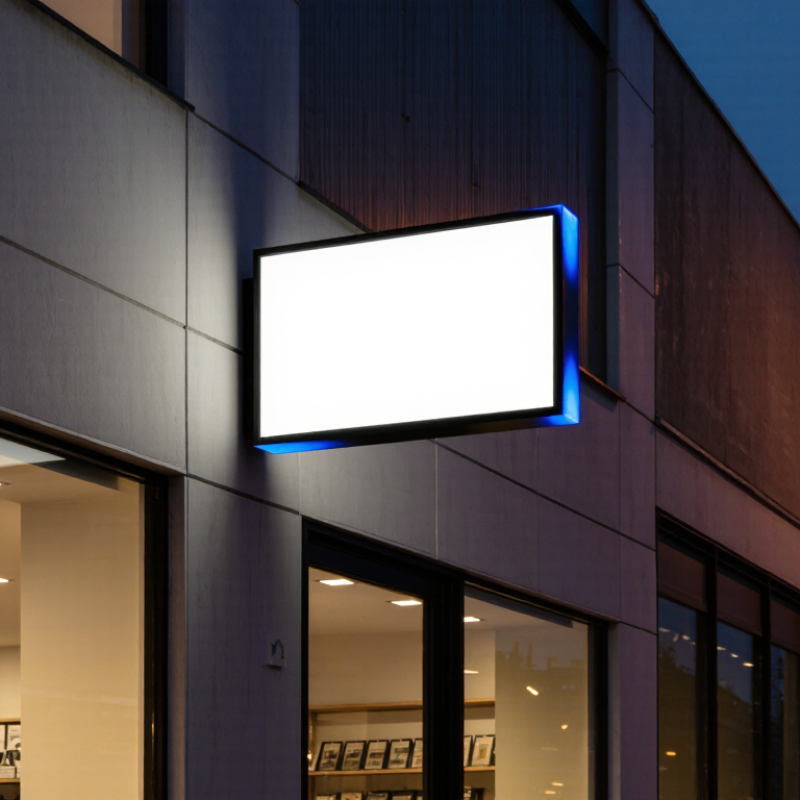
Why Choose Illuminated LED Signs for Your Business?

What Illuminated LED Signs Are

An illuminated LED sign is a display that uses light-emitting diodes to make words, symbols, or graphics visible. LEDs sit behind, within, or around the sign’s face. When powered, they create a bright, direct glow rather than relying only on nearby lighting. A shop window might use a compact panel with glowing opening hours, while an exterior sign could combine illuminated letters with a larger background panel. The exact appearance depends on the design, materials, and viewing distance.

Tips: Check how the sign looks in daylight and after dark. Notice whether the lettering stays readable from across the street. Ask about brightness control, power needs, and access for maintenance. A sign that looks vivid indoors may feel too bright at night.

LED signs can display steady text or changing messages, depending on their controls. Some use fixed lettering; others use programmable pixels that form different images. This distinction can feel blurry when comparing product descriptions, so check what the display can actually change. Also consider glare, reflections on glass, and the space around the sign. LEDs are efficient light sources, but the full sign still needs suitable wiring and a durable enclosure. Small details matter. A loose connection or poorly placed panel can affect visibility, even when the LEDs themselves work well.
How LED Signs Create Bright, Visible Displays

Illuminated LED signs make business information easier to spot in changing light. A lit sign can hold its contrast at dusk, under cloudy skies, or beside a busy road. Clear lettering, generous spacing, and a calm background help people read it quickly. More brightness alone is not the answer. Glare can wash out letters, especially on glossy surfaces, so placement and contrast matter.

A 2012 FedEx Office survey, conducted by Ketchum Global Research & Analytics, found that 76% of respondents had entered a store they had never visited because of its signs. The survey also reported that 68% had bought a product or service after seeing an appealing sign. These are self-reported survey findings, not proof that signs alone caused the decisions. Still, they show why visibility deserves attention. A sign should be tested from the sidewalk and from a moving vehicle, not just viewed up close.

Energy use matters, too. The U.S. Department of Energy says LEDs use at least 75% less energy and last up to 25 times longer than incandescent lighting. That comparison does not guarantee a specific sign’s savings; size, operating hours, and maintenance all affect the result. Look at it after dark. If the message feels crowded, revise it before increasing brightness.

Benefits of LED Signs for Business Visibility

Illuminated LED signs help a business stay noticeable when daylight fades, storefronts compete, or passing traffic moves quickly. Their bright, even light can make opening hours, entrances, and key messages easier to spot from the sidewalk. In a 2012 U.S. consumer survey of 500 adults, 76% said they had entered a store they had never visited because its signage caught their attention. Visibility can bring people closer. It cannot guarantee a sale.

LEDs also offer practical advantages for businesses that keep signs lit for long hours. The U.S. Department of Energy reports that LED lighting uses at least 75% less energy than incandescent lighting and can last up to 25 times longer. Those figures describe LED lighting broadly, not every finished sign; design, operating hours, and maintenance affect actual results. Small details matter. A dim corner or glare across the lettering can undermine a sign’s impact.

Before choosing a sign, check how it looks from the street at midday and after dark. Consider viewing distance, letter size, surrounding light, and whether the message can be read in a few seconds. A 2012 consumer signage survey also found that 68% of respondents had purchased a product or service because a sign caught their eye. Still, brightness alone is not a strategy. A crowded message can remain hard to read, even when it shines.

Common Business Uses for Illuminated LED Signs

Illuminated LED signs serve different jobs across a business. On a storefront, they help customers spot the entrance after dusk or through light rain. Inside, a lit menu board can make prices and choices easier to scan. In parking areas, directional signs can guide visitors toward entrances, pickup points, or accessible routes. Small details matter. Clear arrows and readable lettering often do more than extra brightness.

The Sign Research Foundation’s 2012 report, The Economic Value of On-Premise Signs, found that many surveyed businesses reported sales gains after adding or updating signs. The finding covers on-premise signage broadly, not LED signs alone. Still, it supports treating signs as part of customer access, not merely decoration. For retailers, clinics, and restaurants, a consistent sign system can reduce confusion between the street, lobby, and service counter.

Energy use deserves a closer look. The U.S. Department of Energy reports that LEDs use at least 75% less energy than incandescent lighting; this is a general lighting comparison, not a sign-specific guarantee. Actual savings depend on sign size, operating hours, brightness, and controls. A sign that shines into nearby windows may be technically visible but poorly placed. Before ordering one, check sightlines in daylight and after dark, then confirm that key words remain legible from the sidewalk.

Why Choose Illuminated LED Signs for Your Business?

Common uses include helping businesses identify their locations, display information, and attract attention in indoor and outdoor settings.

Each bar represents one example use, not its popularity or measured effectiveness. The equal bar heights are intentional; they do not represent survey results, market share, or performance data.

Factors to Consider When Choosing an LED Sign

Choosing an illuminated LED sign starts with its viewing conditions, not just its appearance.

Measure the distance from the sidewalk or road, then consider how quickly people pass. A driver needs simpler, larger lettering than someone walking past a storefront. Check brightness in daylight and after dark; a sign that looks clear at noon may glare against a dim street.

Test it at night.

Resolution matters, too.

Fine text can blur when viewers stand far away, so match pixel spacing and sign size to the expected viewing distance. Consider ambient light, weather exposure, mounting access, power use, and how easily individual components can be serviced. Ask the installer for written specifications, warranty details, and a realistic maintenance plan.

Details matter. Confirm that the proposed brightness and placement suit the site and meet applicable local signage requirements.

A showroom sample cannot fully reproduce a rainy evening or a bright shop window nearby. Visit the location at different times, and be willing to revise the design if the sign feels distracting or difficult to read.