Top 10 Custom Signs You Need for Your Business Success?
In today's competitive market, effective communication is crucial for business success. Custom signs play a vital role in conveying your brand message. They are not just decorative elements; they serve practical purposes too. Well-designed signs attract customers, guide them, and enhance their experience.
Custom signs can take many forms. From storefront signs to banners, they help draw attention. The right sign can make a lasting impression. However, choosing the design and placement requires careful thought. Poorly placed or unattractive signs can reflect badly on your brand. Sometimes, less is more in design.
Many businesses overlook the power of signage. Some think a simple logo is enough. This oversight can lead to missed opportunities. Investing in high-quality custom signs can elevate your presence in a crowded market. When done right, signs tell your unique story and engage your audience effectively.
Essential Signs for Business Visibility and Brand Identity
When considering business visibility and brand identity, custom signs are crucial. Research from the Sign Research Foundation reveals that nearly 76% of consumers enter a store they’ve never visited based on its signs alone. This statistic highlights the importance of designing eye-catching signs that reflect your brand's uniqueness.
Essential signs include storefront signs, directional signs, and promotional banners. Each plays a vital role in guiding customers and enhancing their experience. Directional signs help people find specific areas, especially in large spaces. Prominent storefront signs draw attention and inform about your offerings. Yet, many businesses neglect basic signage principles. For instance, a sign with too much text can confuse rather than attract.
Moreover, the local context matters. A sign that works well in one area may not resonate in another. Tailoring your signs for local cultures can enhance effectiveness. A recent study indicates that businesses with customized signs enjoy up to 30% more foot traffic. Nevertheless, many companies overlook this potential, leading to missed opportunities. Effective signage is not just a detail; it’s a necessity for growth and recognition.
Top 10 Custom Signs You Need for Your Business Success
| Sign Type |
Purpose |
Material |
Size (ft) |
Estimated Cost ($) |
| Outdoor Business Sign |
Brand visibility |
Aluminum |
4 x 10 |
500 |
| Window Graphics |
Attract potential customers |
Vinyl |
3 x 6 |
200 |
| A-Frame Sign |
Directional signage |
Wood |
2 x 3 |
150 |
| Digital Signage |
Dynamic advertising |
LCD/LED |
5 x 3 |
2500 |
| Wall Mural |
Brand storytelling |
Canvas |
8 x 12 |
800 |
| Parking Sign |
Customer convenience |
Metal |
2 x 2 |
100 |
| Event Banners |
Promote events |
Vinyl |
6 x 4 |
300 |
| Wayfinding Sign |
Guide customers |
Wood |
2 x 5 |
200 |
| Menu Boards |
Display offerings |
Plastic |
3 x 4 |
250 |
| Business Hours Sign |
Inform customers |
Acrylic |
1 x 2 |
75 |
Informational Signs to Educate Your Customers Effectively
Informational signs are essential for any business aiming to educate customers effectively. They guide, inform, and enhance the overall experience. A well-placed sign can clarify services, highlight promotions, or even share important safety information. For example, a simple directional sign can help customers locate restrooms or exits. It reduces frustration and saves time, allowing customers to enjoy their visit more.
Another critical aspect is clarity. Signs with clear messages attract attention. Use concise wording and visually appealing designs. Consider using symbols or icons for multi-language support. These elements make the information accessible to all customers. However, be cautious of overcrowding the sign with details. Less is often more when it comes to impactful communication.
Reflect on the placement of your signs. A poorly positioned sign might go unnoticed. Maybe it blends into the background. Evaluating foot traffic patterns can help optimize locations. Consistent updates will keep information relevant. Even the best signs can become outdated quickly. Engage with your customers to refine the messaging continually.
Top 10 Custom Signs You Need for Your Business Success
This bar chart illustrates the importance of different types of custom signs in enhancing business success. The data reflects the average effectiveness rating of various informational signs based on customer feedback.
Promotional Signs to Boost Sales and Special Offers
Promotional signs can be game-changers. They attract attention and boost sales. Special offers displayed prominently entice customers. Think vibrant colors and bold fonts. A clear message draws people in fast.
Tips: Use concise language. A short phrase works better than long sentences. Make your offer stand out with a unique design. Customers often overlook plain signs.
Remember, placement matters. Position signs where they catch the eye. Front windows or high-traffic areas work well. Yet, don’t clutter these spaces. Too many signs can confuse potential buyers. Reflect on what makes your offer special. Does it resonate with your audience?
Your signs should tell a story. Visual imagery paired with text creates impact. People connect with visuals more than words alone. Always test different designs to find what works. It may take time to perfect your approach. Don’t hesitate to revise until you hit the mark.
Directional Signs for Improved Customer Navigation in Your Space
Directional signs are vital for enhancing customer navigation in your space. They help guide clients efficiently through your location, making their experience smoother. For instance, clear signs can direct customers to restrooms, exits, or specific departments. When strategically placed, they reduce confusion and frustration. A well-placed sign can increase customer satisfaction significantly.
Here are some tips for effective directional signage. Use simple language and clear symbols. This helps everyone, including non-native speakers. Choose contrasting colors for visibility. Brighter signs stand out better, catching the eye. Ensure that the signs are at eye level. This simple adjustment makes a big difference in accessibility.
Consider incorporating arrows and wayfinding graphics. These elements can simplify the navigation process further. Customer feedback can help assess the effectiveness of your signs. If clients still struggle to locate areas, it may be time to rethink your placements. Learning and adapting is key to achieving better navigation in your business space.
Safety Signs to Ensure a Secure Environment for Employees and Patrons
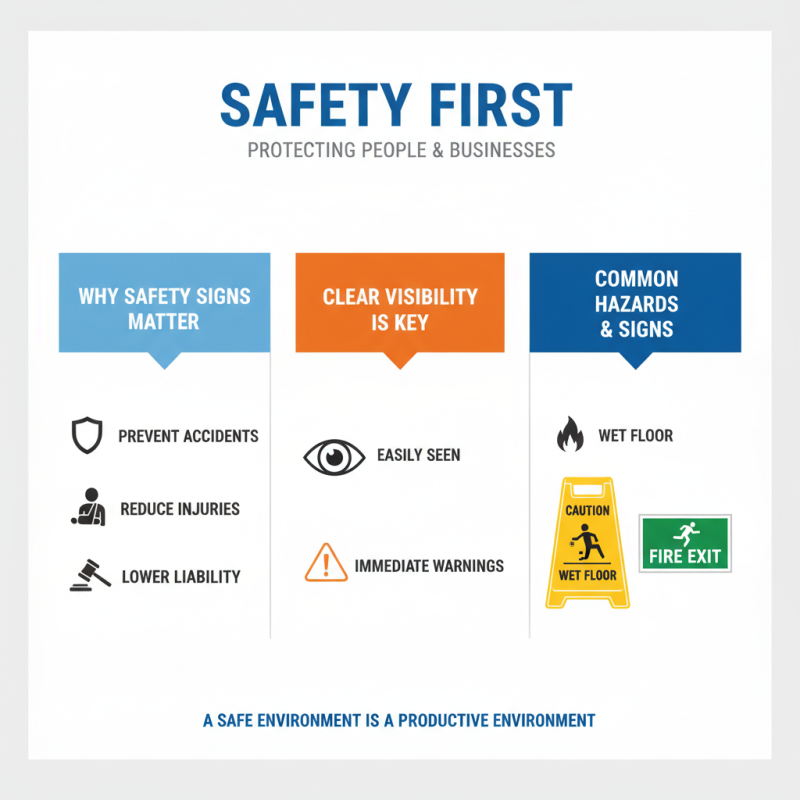
In any business, safety is paramount. Safety signs play a vital role in maintaining a secure environment for both employees and patrons. Clear, visible signs alert everyone to potential hazards. An unmarked wet floor can lead to accidents. A simple "Caution: Wet Floor" sign can prevent injuries and reduce liability.
Tips for using safety signs effectively: ensure they are placed in high-traffic areas. Use bright colors and large fonts for visibility. Regularly inspect signs to ensure they are not faded or damaged. It's easy to overlook these signs, but their importance cannot be overstated.
Another aspect to consider is the type of safety messages used. Signs like "Exit," "Fire Hazard," and "No Smoking" must be clear. A poorly worded sign can lead to confusion. For instance, using complex language for simple warnings is not helpful. Simple is better. Everyone should understand the message at a glance. Regular training can help reinforce the importance of these signs in promoting workplace safety.