How to Choose the Right Light Box for Your Business?
Choosing a Light Box is not simply a matter of picking the brightest panel. It is a decision about visibility, viewing distance, installation conditions, energy use, and the impression your business wants to leave. Picture a customer walking past a shop window at dusk: small lettering may disappear, while an oversized, glaring display can feel harsh. The right balance depends on where the box will sit and who needs to read it.
Industry data can offer context, but not a guaranteed sales result. The Outdoor Advertising Association of America reported that U.S. out-of-home advertising revenue reached $9.1 billion in 2023. That figure reflects a wider market for visible, place-based messaging; it does not prove that one Light Box will increase a particular store’s revenue. Useful caution. Before comparing products, check the actual viewing distance, ambient light, graphic material, and available power. Ask suppliers for illuminated samples, not just polished product photos.
Lighting designer Richard Kelly described three effects as “focal glow, ambient luminescence, and play of brilliants.” His framework helps explain why a display needs more than raw brightness: it should attract attention, sit comfortably within its surroundings, and make key details clear. There is no perfect specification sheet. A box that works beautifully in a dim café may wash out beside a sunlit entrance. This guide will help you compare indoor and outdoor formats, illumination types, sizing, durability, and maintenance needs—then choose a Light Box that fits your location and budget, rather than an impressive number on a brochure.
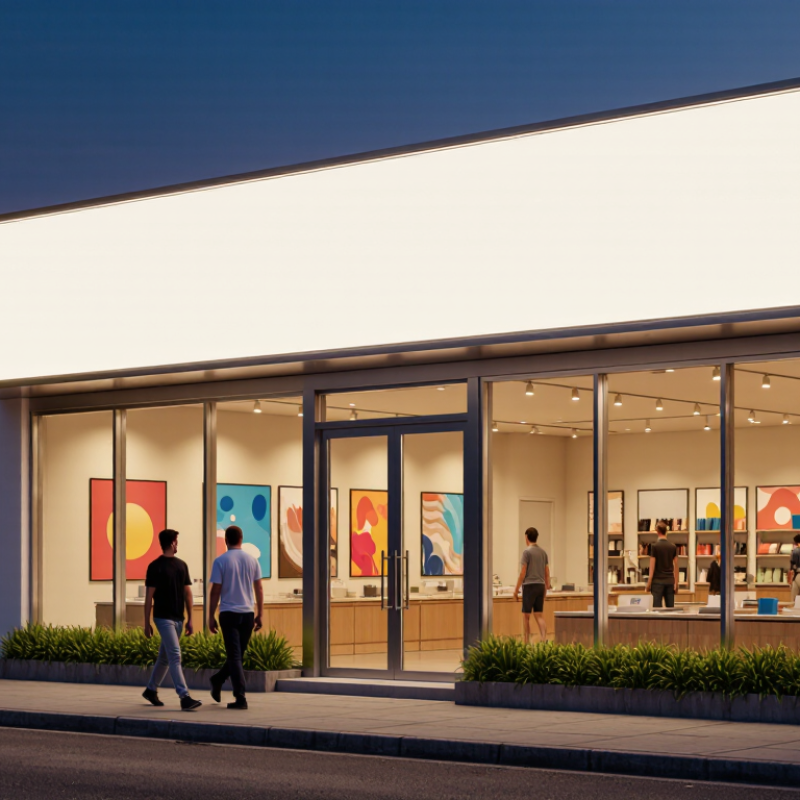
Determine the Light Box’s Purpose and Display Location
A light box should solve a specific display problem, not simply add brightness. A storefront window needs to catch attention from across a pavement, while a reception sign should remain readable at close range. A backlit menu may need even illumination so small prices and details stay clear. Start with the purpose. Then consider who will view it, how far away they will stand, and how long they need to read it.
The location can change the right choice. Note whether the display sits indoors or outdoors, faces direct sunlight, or competes with overhead lighting. Check the available wall or window space, viewing angle, and access to a power outlet before choosing a size. At a busy entrance, a slim unit may keep the walkway clear; near a sunlit window, a dim display can disappear by midday. Not always obvious. Measure the site in person when possible, and observe it at different times of day. A photo can miss glare and shadows. It is tempting to focus on brightness alone, but fit, readability, and maintenance matter too. If the purpose or viewing conditions are uncertain, test a sample placement before committing.
How to Choose the Right Light Box for Your Business?
Determine the Light Box’s Purpose and Display Location
Ambient illuminance varies by location and time of day. Use these approximate reference levels to assess where your light box will be seen: brighter surroundings may require a brighter display and stronger contrast. Measure the actual site before choosing; these figures are general examples, not guaranteed conditions.
Compare Light Box Formats and Lighting Technologies
A light box format should fit the viewing distance and the space, not just the artwork.
Slim edge-lit frames suit narrow corridors and counters, where depth is limited. Their LEDs shine through a light guide, so uneven brightness can show if the panel is poorly designed. Backlit fabric frames work well on broad walls and trade-show displays. The soft textile face hides small seams, but wrinkles can still catch side lighting. Acrylic-faced boxes create a crisp, glossy image for close viewing. Check reflections near windows before choosing one.
I still double-check this.
Lighting technology affects running costs and maintenance. The U.S. Department of Energy’s Energy Saver guidance reports that LEDs use at least 75% less energy and last up to 25 times longer than incandescent lighting. That comparison is not a direct test against fluorescent tubes, so avoid treating it as one. For a fair quote, compare measured power use, expected operating hours, color temperature, and warranty terms. Ask for a lit sample. Inspect it from the actual customer approach, not only straight on. Cool white can make product details look sharp, while warmer light may feel calmer in a café. Neither is universally right. Even a bright box can disappoint when its edges look dim or its color shifts across the face.
Review Installation, Maintenance, and Safety Requirements
Before choosing a light box, confirm where it will sit and how technicians will reach it. Check wall strength, mounting points, cable routes, weather exposure, and space for opening the cabinet. Outdoor units need sound seals and drainage; trapped moisture can damage wiring and dim the display. Small details matter. Ask a qualified installer to verify the electrical supply and isolation method before work begins.
Access planning is a safety requirement, not an afterthought. The U.S. Bureau of Labor Statistics recorded 865 fatal work injuries involving falls, slips, and trips in 2022. For elevated signs, plan stable access, a controlled work area, and safe handling of heavy panels. Do not assume a ladder is suitable just because the job looks brief. That assumption is easy to make, and worth questioning.
Maintenance needs should influence the design. Choose a box with accessible drivers, replaceable components, and clear instructions for cleaning and inspection. The U.S. Department of Energy reports that LEDs use at least 75% less energy and can last up to 25 times longer than incandescent lighting. Those figures are useful benchmarks, not a promise for every installation. Dust, heat, and poor ventilation still shorten service life. Set inspection intervals, check seals and connections, and keep a simple record of repairs.
Balance Budget, Customization, and Long-Term Value
A light box should fit both your space and your budget. Before comparing prices, measure the wall, viewing distance, and available power access. A narrow hallway needs different brightness and proportions than a storefront viewed across a busy street. Get these details wrong, and even a well-made display may feel awkward.
A low purchase price can hide costs such as difficult installation, frequent lamp replacement, or a frame that cannot be updated. Ask about materials, expected light-source life, warranty coverage, and how easily graphics can be changed. Keep the questions practical. If a supplier cannot explain the specifications clearly, pause before ordering.
Customization can make a display more useful, but every special size, finish, or mounting feature may increase cost. Choose options that solve a real problem, such as a shallow frame for a tight corridor. Request a sample or proof to check color and readability under your actual lighting. Small details matter.
Think beyond opening day. An energy-efficient light box may cost more upfront but use less electricity over years of operation. Still, projections depend on usage and maintenance, so ask how estimates were calculated. It is easy to overvalue a polished finish and overlook service access. Leave room in the budget for that, too.
How to Choose the Right Light Box for Your Business? — Balance Budget, Customization, and Long-Term Value
Selection tip: Compare the complete installed cost, expected graphic-change frequency, warranty, driver accessibility, and quoted energy use. LED lifetime figures are rated component estimates, not guarantees of the service life of the entire light box.