Why Are Building Signs Essential for Effective Business Marketing?
Building signs are a crucial aspect of effective business marketing. According to industry expert Jane Smith, "Building signs are often the first impression customers have of your brand." This emphasizes the importance of visual branding in attracting potential clients. A well-designed sign not only communicates the name of a business but also conveys its values and personality.
In today's competitive market, standing out is essential. Building signs enhance visibility, providing clear information to passersby. They help potential customers identify a business location without confusion. However, not all signs are created equal. Poor design choices can misrepresent a brand or fail to attract attention. The challenge lies in striking a balance between creativity and clarity.
Furthermore, the effectiveness of building signs can depend on their placement and lighting. Research shows that a well-illuminated sign can increase foot traffic significantly. This highlights the need for strategic planning in sign placement. Ultimately, investing in quality building signs is an investment in a business's success.

The Role of Building Signs in Brand Visibility and Recognition
Building signs play a vital role in enhancing brand visibility. They are often the first interaction customers have with a business. An eye-catching sign can draw attention and invite potential clients inside. It’s a silent yet powerful marketing tool. Businesses need to invest time and effort into creating unique signs that reflect their brand identity.
Effective building signs go beyond mere aesthetics. They convey essential information at a glance. Directional signs, for instance, guide customers conveniently. Clear, bold lettering ensures readability from a distance. However, many brands overlook this aspect. They might prioritize design over clarity, ultimately diminishing their visibility. A good sign tells a story. It speaks to passersby, often without saying a word.
Visibility is only part of the equation; recognition matters too. Repeated exposure to a well-designed sign can reinforce a brand's identity. Over time, customers become familiar with the logo and colors. It fosters trust and loyalty. Yet, businesses should regularly assess their signage. Does it still resonate with their target audience? Or has it become outdated? Such reflections lead to necessary updates, keeping a brand fresh and engaging.
Impact of Building Signs on Brand Visibility
Types of Building Signs and Their Impacts on Customer Engagement
Building signs serve as a crucial component of a business's marketing strategy. They are often the first interaction a customer has with a brand. Various types of building signs can significantly influence customer engagement. For example, illuminated signs attract attention at night, while digital displays offer dynamic content that can inform passersby.
Effective sign design must be clear and legible. A well-placed sign with bold colors can stand out in a crowded environment. Consider using contrasting colors to make your message pop. It's essential to ensure that the design aligns with your brand identity. This consistency builds trust with your audience.
Tips: Use high-quality materials to enhance durability. Regular maintenance keeps signs looking fresh. Reflect on your current signage. Does it convey the right message? Engaging local expertise can elevate your signage strategy. To maximize impact, evaluate your location. Are your signs visible from a distance? Engaging with feedback can refine your approach.
Design Considerations for Effective Marketing Through Building Signs
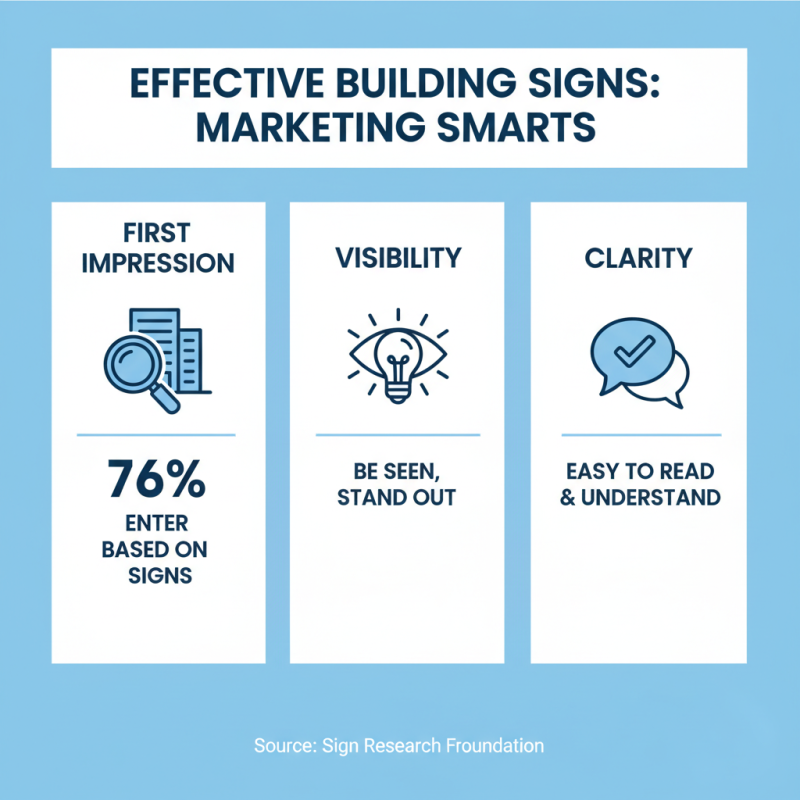
Effective building signs are critical for business marketing. A well-designed sign functions as a first impression. According to a recent survey by the Sign Research Foundation, nearly 76% of customers enter a store they have never visited based solely on its signs. It highlights the importance of visibility and clarity in design.
The design should reflect the brand’s identity. Colors, fonts, and images should align with the overall marketing strategy. A mismatch may confuse potential customers. The study also states that over 50% of consumers view signs as an indicator of quality. Thus, investing in professional design is crucial.
Additionally, placement and size matter significantly. Signs need to be easy to read from a distance and in various lighting conditions. Research indicates that effective signs can increase sales by 7-15%. However, many businesses still overlook these factors. Regular assessments of sign performance can reveal areas for improvement. Balancing functionality and creativity in sign design is essential, yet often underutilized.
Legal and Regulatory Aspects of Installing Commercial Building Signs
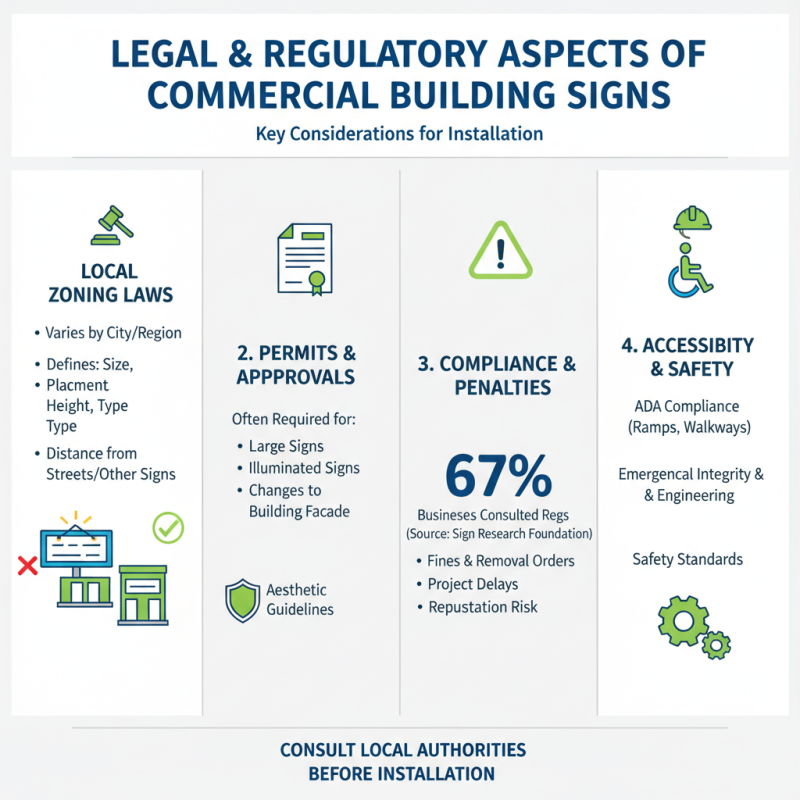
When considering commercial building signs, legal and regulatory aspects come to the forefront. Compliance with local zoning laws is crucial. Cities often have specific regulations regarding size, placement, and lighting of signs. For example, in urban areas, signs might need permits due to size restrictions or aesthetic guidelines. In a survey by the Sign Research Foundation, 67% of businesses reported needing to consult regulations before installation to avoid penalties.
Signage must also adhere to safety standards. This includes ensuring that signs do not obstruct view or create hazards. According to the International Code Council, poorly placed signs can lead to accidents. The same survey revealed that 40% of businesses found navigating legal requirements to be challenging. Failure to follow these can result in fines or dismantling of the sign.
Moreover, businesses must consider accessibility for all potential customers. This means ensuring that signs are read easily by everyone, including individuals with disabilities. The Americans with Disabilities Act (ADA) provides standards for visibility and placement of signage. In summary, understanding and integrating these legal aspects can profoundly affect the effectiveness and longevity of commercial signs in marketing initiatives.
Measuring the Effectiveness of Building Signs in Business Growth
Building signs play a crucial role in enhancing business visibility. They serve as a first impression for potential customers. A well-designed sign attracts attention and communicates core brand messages effectively. It’s essential to measure the effectiveness of these signs to understand their impact on business growth.
Consider foot traffic; businesses reporting higher foot traffic often attribute this to their signage. Studies show that clear, appealing signs can increase customer inquiries. Local surveys suggest that signage contributes significantly to brand recognition. However, not all signs deliver results. A poorly placed or designed sign can fail to attract interest. Regular audits of signage effectiveness can help identify issues.
Moreover, signs should reflect the essence of the business. They need to be updated as branding evolves. Ignoring this can lead to a disconnect between the sign and actual offerings. Inconsistent messaging can confuse customers and detract from trust in the brand. Continuous testing and refinement are key to maximizing the marketing power of building signs.