Choosing the right Office Signage supplier in China can affect more than appearance. It can influence wayfinding, brand consistency, installation schedules, and long-term maintenance. A polished showroom image is useful, but it cannot tell you how a supplier handles color matching, packaging, or a delayed approval. Small details matter.
This guide examines suppliers through practical evidence: product range, material options, production processes, quality checks, communication, and after-sales support. Buyers should ask for recent project examples, clear specifications, and physical samples when possible. A sample can reveal surface texture, edge finishing, and color variation that photos may hide. It is also worth checking whether the supplier can coordinate design, fabrication, delivery, and installation, or only some of these stages.
There is no single “best” supplier for every office. A small workspace may need crisp door signs and simple directional panels, while a multi-floor headquarters may require coordinated directories, reception lettering, and consistent room labels. Price matters, but so do realistic lead times and written quality expectations. No ranking can replace project-specific checks. Some details are easy to miss. This comparison aims to help readers ask better questions, compare claims fairly, and choose a partner whose documented capabilities fit their space, budget, and schedule.
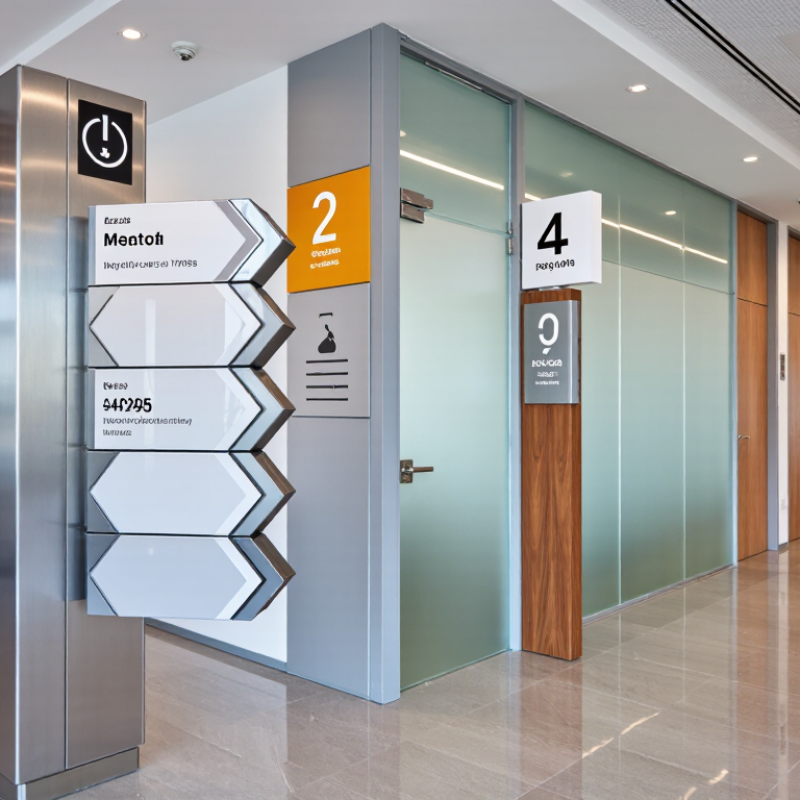
Office signage suppliers in China commonly provide reception signs, room plaques, directional signs, floor directories, and window graphics. Many can produce dimensional lettering in acrylic or metal, along with printed panels and illuminated signs. The right mix depends on the building, budget, and how visitors move through the space.
Good suppliers may help refine layouts, recommend materials, prepare digital proofs, and arrange production and installation. Some also offer site measurements and replacement parts. Ask for material samples and confirm sign dimensions, finishes, mounting methods, and delivery schedules before approving production. Small details matter. A polished mockup can still hide glare, awkward viewing angles, or lettering that is hard to read from a corridor.
For a practical evaluation, request examples of similar office projects and a written scope covering design changes, packing, shipping, and after-sales support. Check whether the supplier can coordinate with local installers if installation is outside its service area. Quality varies, and a low quote may exclude useful steps such as on-site checks. That is easy to overlook. Clear communication and careful proofing often matter as much as the sign materials themselves.

Who Are the Best Office Signage Suppliers in China?
How to Evaluate Supplier Experience and Production Capabilities
A capable office signage supplier should show more than a polished catalog. Ask how many comparable projects they have completed, and request photos of signs installed in real offices. Look for details: even letter spacing, clean edges, consistent color, and legible text under typical indoor lighting. A long history can help, but it does not guarantee careful work.
Check production capability with a sample or a small pilot order. Review material options, finish quality, mounting methods, and how the supplier checks dimensions before fabrication. Ask who handles design revisions and how defects are recorded. Clear answers matter. A factory tour, video walkthrough, or dated production photos can help confirm equipment and workflow. Still, I have seen tidy sample pieces fail to reflect rushed bulk production, so ask how samples are matched to final orders.
Tips: Share drawings with exact measurements, wall conditions, and lighting notes. Request a written schedule with approval and inspection points. Compare the supplier’s stated capacity with your order size and deadline, rather than relying on reassuring phrases. A little doubt is useful. Verify the details.
Use this weighted scorecard to compare office signage suppliers. It focuses on verifiable experience, manufacturing capability, quality controls, and project delivery rather than unverified supplier-specific claims.
| Evaluation Dimension | Weight | Evidence to Request and Check | Scoring Guidance |
|---|---|---|---|
| Relevant Project Experience | 15% | Project references for office interiors, wayfinding, reception signs, room identification, or multi-site rollouts. Confirm dates, scope, materials, and the supplier’s role. | Score higher when references are recent, comparable in complexity, and supported by verifiable project records or client references. |
| Portfolio Relevance | 10% | Completed-project photographs, drawings, sign schedules, and examples showing a range of sign types, finishes, mounting methods, and environments. | Assess whether the examples demonstrate experience with the intended sign types and installation conditions. Distinguish completed work from concept renderings. |
| Design and Engineering | 10% | Artwork proofing process, dimensioned drawings, material specifications, mounting details, and procedures for checking text, languages, and revisions. | Score higher for clear approval stages, production-ready documentation, and a documented method for controlling drawing and artwork revisions. |
| Material and Finish Control | 10% | Material specifications and samples for items such as acrylic, metal, wood, film, or printed substrates; finish samples; and records of material substitutions. | Evaluate whether specifications identify material, thickness, finish, color reference where applicable, and approved alternatives before production. |
| Production Equipment and Processes | 10% | A factory walkthrough or current production records covering relevant processes, such as CNC routing, laser cutting, engraving, printing, metal fabrication, or assembly. | Score according to whether the supplier can demonstrate the processes required for the project and explain which operations are performed in-house or subcontracted. |
| Production Capacity | 10% | Current production schedule, staffing and shift information, available capacity for the requested quantity, and a realistic production plan. | Compare the proposed schedule with the project quantity and deadline. Confirm capacity for peak periods rather than relying only on stated maximum output. |
| Quality Assurance | 10% | Incoming-material checks, in-process inspections, finished-product inspection criteria, sample approval records, and procedures for handling defects or rework. | Score higher for documented checkpoints, measurable acceptance criteria, traceable inspection records, and a defined corrective-action process. |
| Certifications and Compliance | 5% | Copies of relevant, current certificates or test reports, including the issuing body, covered facility or product, scope, and validity dates. | Assess relevance to the order and destination market. Verify documents with the issuer where necessary; do not treat unrelated certificates as proof of product compliance. |
| Packaging and Shipment Readiness | 5% | Packing specifications, protection for fragile or finished surfaces, carton labeling, packing lists, and a plan for separating and identifying project components. | Score higher when packaging is appropriate for the sign materials, shipment method, handling risks, and installation sequence. |
| Communication and Project Control | 5% | Named project contact, response process, written status updates, approval tracking, and documented handling of scope or schedule changes. | Evaluate clarity, consistency, and whether decisions, approvals, and changes are recorded in writing. |
| Delivery Reliability | 5% | Agreed production milestones, shipment plan, lead-time assumptions, and records or references that support the supplier’s delivery history. | Score based on evidence and schedule transparency. Confirm what the quoted lead time includes, such as proof approval, production, packing, and dispatch. |
| Installation Support | 5% | Installation drawings, fixing details, hardware lists, installation instructions, and the availability and location of any installation support. | Assess whether the documentation suits the project site and whether installation responsibilities, access requirements, and exclusions are clearly defined. |
| Total | 100% | Apply the same evidence requirements and scoring method to every supplier being compared. | |
Suggested scoring method: rate each dimension from 1 to 5, where 1 means insufficient evidence and 5 means strong, verifiable evidence. Multiply each rating by its weight to calculate a weighted comparison score. Treat this as a buyer’s evaluation framework, not as a ranking of named suppliers.
Leading office signage suppliers in China combine clear design with dependable production. A strong partner can translate a floor plan into entrance signs, room numbers, directory panels, and evacuation-route markers. Ask for material samples, finish options, and a drawing that shows exact sizes. Check how the supplier handles revisions, packing, and installation support. Small details matter. A brushed-metal plaque may look elegant, but glare can make its lettering hard to read under bright office lights.
The market is moving toward digital displays, too. MarketsandMarkets estimated the global digital signage market at US$26.76 billion in 2024, with a forecast of US$35.94 billion by 2029. That growth makes it useful to ask suppliers about screen brightness, content updates, power needs, and maintenance—not just the display itself. For offices, a mixed system often works better: durable printed signs for fixed rooms, and screens for changing visitor information. Compare written specifications, production samples, and realistic delivery schedules before choosing.
A fair caution: impressive renderings do not prove consistent manufacturing quality. Request a sample or a detailed quality checklist, especially for large orders.
China’s office signage suppliers differ less by location than by production strengths. Some focus on acrylic door plates, brushed-metal directories, and dimensional lobby letters. Others handle wayfinding systems, illuminated signs, or custom sizes. Ask for material samples and a finish chart. A photograph can hide uneven edges.
Service quality matters just as much. A capable supplier should confirm measurements, artwork files, mounting methods, and packaging before production. For multi-floor projects, request a proof showing arrows, room numbers, and viewing distance. Check whether installation guidance and replacement parts are available. Response speed is useful, but clear answers matter more. A fast quote can still leave basic details unresolved. That is not a small issue.
Tips: Send a marked-up floor plan, not only reference photos. Confirm color samples under the building’s actual lighting. Ask for a written production schedule and inspection photos. Keep one approved sample on file. Small checks help. Compare suppliers by documented process, product fit, and after-sales support—not price alone. Even a strong supplier may miss a detail, so keep approvals specific.
Choosing an office signage supplier in China starts with the project, not a catalogue. Map each sign’s location, size, viewing distance, and purpose. A reception logo needs different materials and lighting from a small room number. Ask how the supplier handles artwork checks, material samples, production, packing, and installation support. Request a physical sample when finish and color matter. A screen image can hide a glossy surface or a slightly warm white. Check relevant project photos and ask what changed between the first proof and final installation. Details like these reveal how a supplier responds when plans shift.
Compare itemized quotations, not just total prices. Confirm material thickness, lighting components, packaging, lead times, and who handles site measurements. Ask how defects or transit damage are documented and resolved. For a multi-floor office, confirm that room names and directional arrows match the latest floor plan. Small test first. It can catch an awkward font size before dozens of signs are made. A careful checklist still misses things; door swings and glare can surprise everyone on site. Leave time for one review with the facilities team, and make sure revisions are recorded in writing.