Best Light Signs for Your Business or Home Use?
Light signs can transform any space, whether it's a business or home. They add vibrancy and attract attention. With various designs, light signs enhance branding and create a welcoming atmosphere. Imagine a bright neon sign illuminating your café or a subtle LED display in your living room. Each option carries its charm.
When choosing light signs, consider the message they convey. Are they clear and engaging? The right sign can draw customers and make a room feel lively. However, not every sign fits every space. Reflect on your style and needs. A flashy sign may overwhelm a cozy shop.
The balance between creativity and functionality is key. Light signs should be eye-catching but not distracting. Experiment with different styles to find the perfect fit. Ultimately, it’s about creating an inviting environment that resonates with people.
Types of Light Signs Suitable for Business and Home Use
Light signs come in various forms, perfect for both business and home use.
LED signs are popular because they are energy-efficient and customizable. Studies show that businesses using lighted signs increase visibility by up to 50%. This is critical for attracting customers in a competitive market.
Neon signs evoke a nostalgic feel. They can create a unique atmosphere in cafes or bars. Their vibrant colors draw attention and can enhance the overall decor.
However, they can be fragile. Maintenance is often needed. Consider avoiding locations with high foot traffic, where they could be easily damaged.
Tips: Evaluate your space before making a purchase. Wall-mounted signs may work well in smaller areas. Portable signs are ideal for outdoor use. Think about brightness levels and visibility at night, especially for residential use. Always remember, the right sign should reflect your brand's message. Aim for a balance between aesthetics and function.
Factors to Consider When Choosing Light Signs
When selecting light signs for your business or home, several factors demand careful consideration. The color palette of the sign influences visibility and emotional response. According to a report by the Color Association, about 85% of consumers make purchase decisions based on color. Opting for vibrant colors can enhance attention-grabbing potential and improve brand recognition. However, choosing too many colors can create visual clutter. Simplicity is crucial.
The size and placement of light signs play a vital role as well. The Illuminating Engineering Society notes that signs viewed from a distance should be larger to ensure clarity. A sign that’s too small risks going unnoticed. Proper placement is key. A well-placed sign can increase foot traffic, while a poorly positioned one might lead to lost opportunities.
Energy efficiency is another important factor. Data from the Department of Energy shows that LED signs use 75% less energy than traditional lighting options. They last longer, providing significant savings over time. However, some may overlook the initial higher cost. While the long-term benefits are clear, the upfront investment can feel daunting for some. Balancing immediate budget constraints with future savings is a common challenge.
Best Light Signs for Your Business or Home Use? - Factors to Consider When Choosing Light Signs
| Sign Type |
Brightness (Lumens) |
Energy Consumption (Watts) |
Lifespan (Hours) |
Indoor/Outdoor |
Average Cost ($) |
| Neon Sign |
450 |
30 |
15,000 |
Indoor |
150 |
| LED Sign |
800 |
45 |
50,000 |
Indoor/Outdoor |
200 |
| Fluorescent Sign |
300 |
40 |
30,000 |
Indoor |
100 |
| Vintage Light Box |
350 |
50 |
25,000 |
Indoor |
120 |
| Channel Letters |
500 |
60 |
40,000 |
Indoor/Outdoor |
300 |
Benefits of Using Light Signs for Branding and Decoration
Light signs have become essential for branding and decoration. They attract attention and convey messages effectively. Businesses often use them to enhance visibility. Homes, too, benefit from the warmth these signs bring. A well-placed light sign can transform a space entirely.
Tips for choosing light signs: consider the size and placement. A large sign can dominate a room, while a small one can add subtle charm. Colors matter, too. Bright colors can energize a space, while softer hues create a calming effect. Don't shy away from being bold. Experimenting with different styles can lead to unexpected results. Sometimes, ideas don’t translate well into reality. Reflect on what works best for your audience.
Use light signs strategically. Think about your message and design. A direct message serves well in business settings. For homes, a playful or artistic approach can make a personal statement. Remember, the right sign can narrate a story or express a mood. The journey to finding the perfect sign may involve trial and error. Embrace the process and enjoy the creativity.
Best Materials for Durable Light Signs
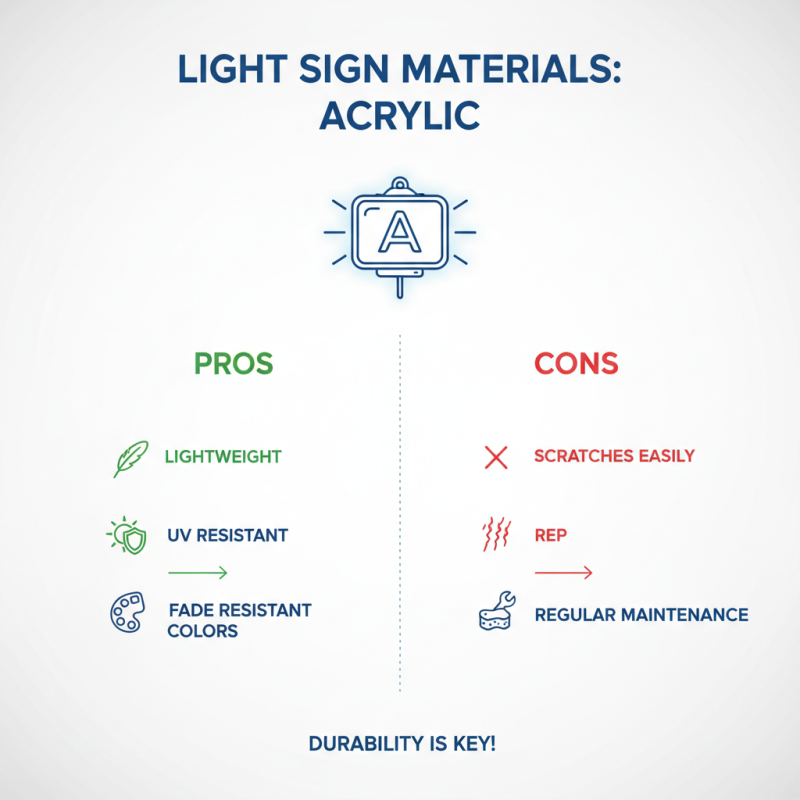
When selecting materials for light signs, durability is key. Acrylic is a popular choice. It’s lightweight and resistant to UV rays. This ensures that colors won’t fade over time. However, it can scratch easily. Regular maintenance is needed to keep it looking fresh.
Metal signs are also durable. They can withstand various weather conditions. Aluminum is a common option for outdoor signage. It’s rust-resistant and has a long lifespan. On the downside, metal can get hot in direct sunlight, making it less ideal for certain settings.
Finally, consider LED panels. They’ve become increasingly popular. They offer bright illumination and energy efficiency. Yet, they can be more expensive upfront. Assessing the environment and usage is essential. A poorly chosen material may lead to frequent replacements or repairs.
Top Recommendations for Light Sign Products and Brands
When choosing light signs for your business or home, consider various factors. Energy efficiency is crucial. LED lights consume less power and last longer than traditional bulbs. Their vibrancy can make your sign more eye-catching. A well-lit sign attracts attention, but only if the brightness is appropriate. Too bright can be harsh, while too dim may get overlooked.
Material matters too. Some signs are plastic, while others are made of metal or glass. Each material offers different aesthetics and durability. Think about where the sign will be displayed. Indoor signs might benefit from softer light, creating a welcoming atmosphere. Outdoor signs need to withstand weather conditions, so robust materials are essential.
Furthermore, consider customization options. Many products allow personalization, from colors to shapes. This can reflect your brand identity or personal taste. Yet, it's easy to overthink these choices and feel overwhelmed. Keep it simple. A clear, direct message usually works best. After all, the goal is to communicate effectively. Re-evaluating your options can lead to better decisions.