Best Led Signs for Business Promotion and Visibility?
In the world of business, visibility is key. Effective promotion can significantly influence customer engagement and sales. In this context, LED signs have emerged as critical tools for visibility and branding. Their bright, vibrant displays capture attention, often drawing in potential customers who might otherwise pass by unnoticed.
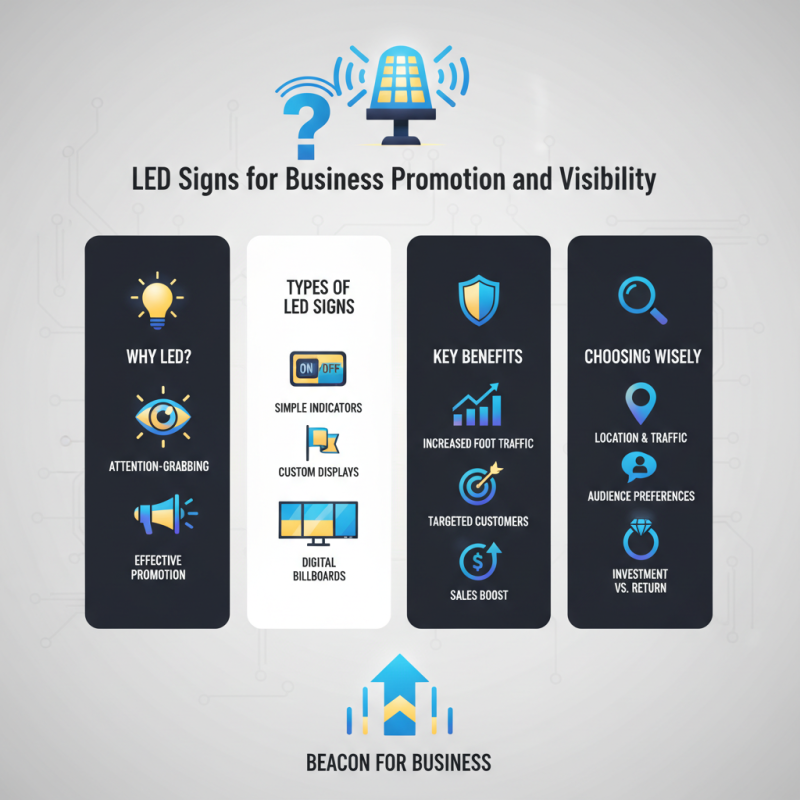
LED signs come in various forms: from simple open/closed indicators to dynamic digital billboards. They can be customized to reflect your brand's message or special promotions. This versatility makes LED signs a favorite among businesses seeking effective advertising solutions. However, not all LED signs are created equal. Some may lack the clarity or brightness required for maximum impact.
Choosing the best LED signs requires careful consideration. Analyze your location and foot traffic patterns. Reflect on your target audience's preferences. A well-placed, high-quality LED sign can serve as a beacon for your business. While the investment might seem daunting, the potential to enhance visibility and drive sales is undeniable.
Benefits of LED Signs in Business Promotion and Visibility
LED signs have become a powerful tool for business promotion. They are eye-catching and versatile. Research indicates that businesses using LED signage can experience up to a 47% increase in visibility. This kind of signage attracts attention in ways that traditional methods often struggle to do. A case study showed that LED signs can boost sales by an average of 15%. This demonstrates their effectiveness in reaching potential customers.
One significant benefit of LED signs is their customization. Businesses can easily update the messages. This keeps content fresh and relevant. Studies have shown that consumers respond favorably to dynamic content. Updating your sign can reflect current promotions, events, or seasonal offers.
Tips:
- Keep your message clear and concise. A simple tagline can be more effective than a lengthy description.
- Consider the placement of your sign. A well-placed LED sign can captivate pedestrians and drivers alike.
- Analyze the performance of your signage regularly. This can help you decide when to refresh content or adjust strategies based on customer response.
Incorporating LED signs into your business strategy can significantly enhance visibility and engagement. Remember that not all signage will resonate in the same way. Adjustments may be necessary based on audience feedback and behavior.
Key Features to Look for in LED Signs for Optimal Impact
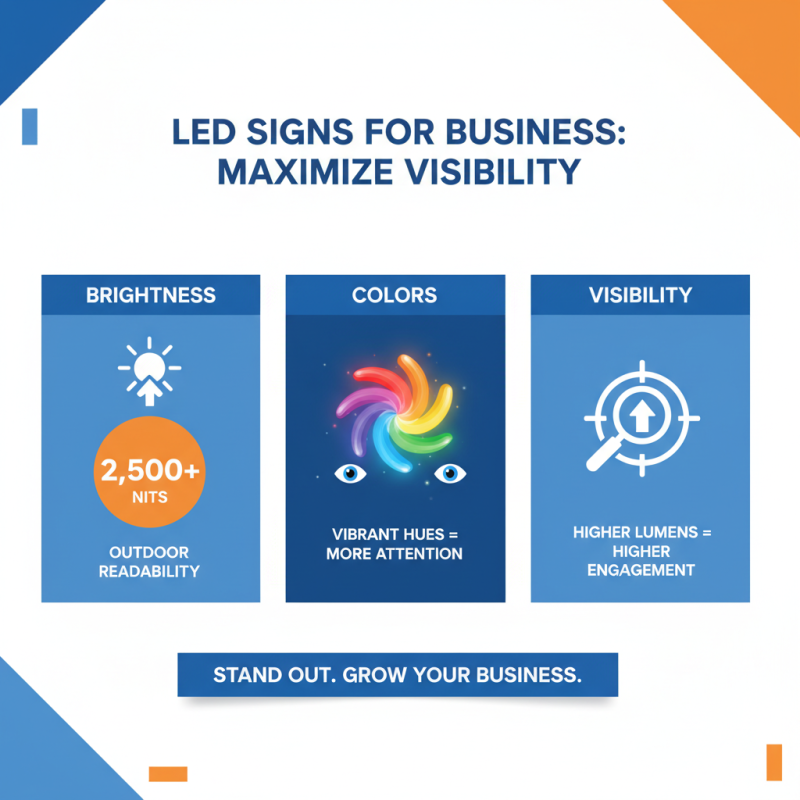
When selecting LED signs for business promotion, certain key features can maximize visibility. Brightness is crucial. Studies show that signs with higher lumens significantly enhance attention. A brightness level of at least 2,500 nits is ideal for outdoor signs. It ensures readability, even in direct sunlight. Colors matter, too; vibrant hues attract more eyes than dull ones.
The size of your LED sign can influence visibility as well. A larger display can be seen from a distance. Reports indicate that signs viewed from over 100 feet away should be at least 48 inches tall for optimal impact. Additionally, the resolution of the sign plays a significant role. Signs with higher pixel density present clearer images and text. This clarity transforms messages into actionable insights.
Consider the versatility of the content displayed. Customization options, such as animations or scrolling text, engage viewers more effectively. Interactive signs can increase foot traffic by up to 30%. Incorporating real-time updates or promotions drives customer interaction. However, overloading the display with information can create confusion. Balance clarity with creativity to achieve the best results.
Comparison of LED Sign Types: Indoor vs. Outdoor Applications
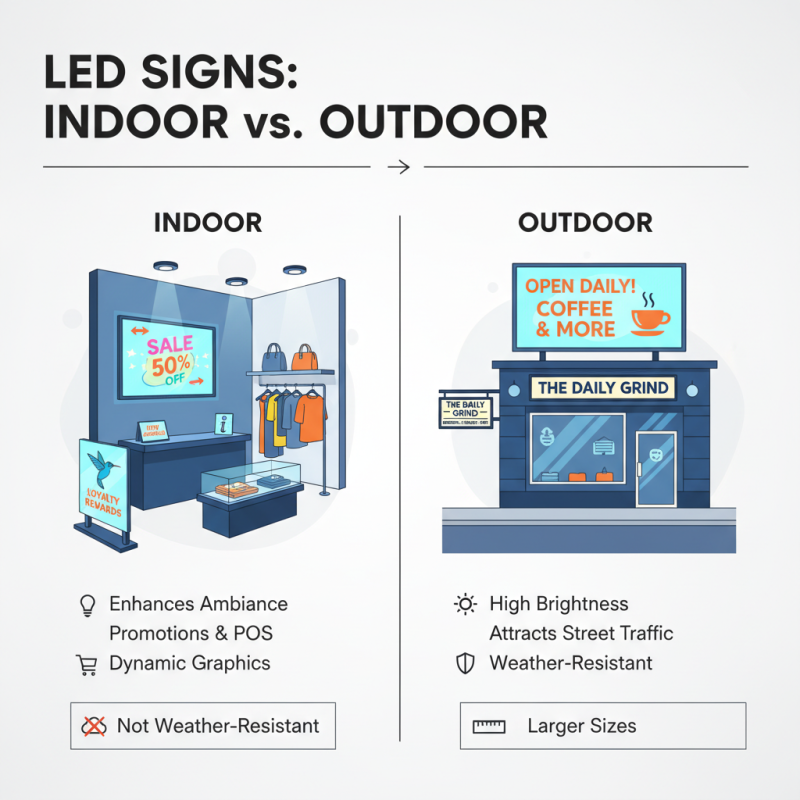
When selecting LED signs for business visibility, understanding indoor versus outdoor applications is crucial. Indoor LED signs often enhance store ambiance. They can display promotions, logos, and point-of-sale information. The vibrant colors and dynamic graphics draw customer attention. However, they generally do not serve the same purpose outside. Indoor signs are usually smaller and less weather-resistant.
Outdoor LED signs face harsher conditions. They are built to withstand sunlight, rain, and wind. These signs are larger, making them suitable for attracting foot traffic. Their bright illumination ensures visibility even at night. Yet, the placement and maintenance can pose challenges. A poorly positioned sign might go unnoticed. Regular upkeep is vital to prevent fading and damage.
In both cases, the goal is clear communication. A well-designed sign conveys a message instantly. Choices about brightness, color, and motion all matter. Misjudging these elements could lead to ineffective signage. Understanding the environment is essential for making the right choice. A sign should complement the business, not detract from it.
Impact of LED Signs on Consumer Behavior and Purchase Decisions
LED signs have transformed the way businesses communicate with customers. Research shows that about 70% of consumers notice LED signs. Their bright colors and motion attract attention, enhancing visibility. A study by the U.S. Small Business Administration indicates that well-placed signage can increase sales by up to 15%. In a world where first impressions matter, these signs create an immediate connection.
The effect of LED signage on consumer behavior is significant. According to a report by the International Sign Association, consumers are 50% more likely to remember a brand with outstanding signage. Moreover, 60% of shoppers claim that the quality of signage influences their purchase decisions. Businesses often underestimate this impact but overlook how signage can convey trust and professionalism.
For many businesses, choosing the right LED sign involves careful thought. Poor design or vague messaging can lead to confusion. While bright lights draw attention, a lack of clear information can lead to missed opportunities. Balancing aesthetics with clarity is crucial. The challenge remains: how to stand out without overwhelming potential customers.
Trends in LED Technology: Innovations Driving Business Visibility
LED technology is rapidly evolving, with innovations enhancing business visibility. One significant trend is the use of dynamic displays. These screens can change messages in real-time, attracting attention more effectively than static signs. A vibrant, animated LED sign draws customers in. Many businesses find that bright colors and moving graphics increase foot traffic.
Another advancement is energy efficiency. Modern LED lights consume less power while providing more brightness. This not only reduces operational costs but also supports eco-friendly practices. Some companies find it challenging to balance visibility and sustainability. They need to consider what resonates with customers while being mindful of energy use.
Moreover, interactive elements are becoming popular. Touch screens allow customers to engage directly. This interactivity can drive sales and improve customer experience. However, some businesses struggle to implement these technologies effectively. Finding the right balance between innovation and practicality can be daunting.