Your Professional Advertising Luminous Sign customizer
Fllow us:
  • shabang01
  • shabang02
  • shabang03
  • shabang04
Leave Your Message

2026 Top Marquee Letter Types for Global Buyers

For global buyers, choosing the right Marquee Letter means balancing visual impact, engineering quality, and regional practicality. A warm bulb design can give a boutique hotel a nostalgic entrance. A slim LED version may suit a technology showroom better. Neon-style acrylic letters create bright color without the fragility of traditional glass tubes. Metal channel letters offer a stronger architectural presence, especially on outdoor façades.

David H. Fellman, a veteran sign-industry consultant, expresses a useful principle: “A sign should sell before it explains.” That idea remains relevant in 2026. Buyers should examine more than photographs. Ask about LED lifespan, color temperature, waterproof ratings, voltage compatibility, mounting systems, and replacement access. A beautiful sample can still become a costly problem if its power supply does not match local standards. Small details matter.

This guide reviews the leading Marquee Letter types for international purchasing. It considers retail stores, restaurants, exhibitions, hotels, and corporate spaces. It also compares acrylic, stainless steel, aluminum, illuminated, and vintage-inspired options. Packaging deserves attention too. Corner protection, moisture control, and clear installation instructions can prevent damage during long-distance shipping. No single style wins everywhere. Climate, branding, budget, and maintenance capacity change the answer. Some buyers may prefer the brightest display, while others need quieter lighting and lower energy use. That tension is worth acknowledging. The most impressive letter is not always the most practical one.
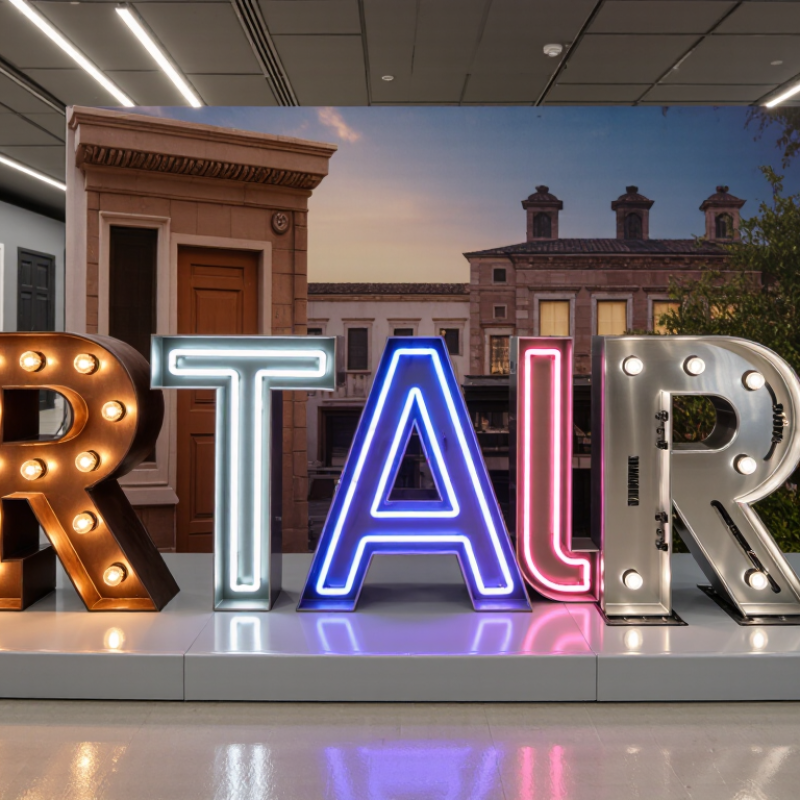
2026 Top Marquee Letter Types for Global Buyers

Define Marquee Letter Types by Illumination, Shape, and Mounting

2026 Top Marquee Letter Types for Global Buyers

Marquee letter types become easier to compare when buyers study illumination, shape, and mounting together. Front-lit letters create strong visibility in daylight and suit busy retail façades. Halo-lit letters produce a softer glow behind each character. They look refined on darker walls. Some projects combine both effects, but excessive brightness can reduce readability at night.

Front-lit letters create strong visibility in daylight, while halo-lit letters produce a softer glow behind each character.

Shape affects both identity and installation cost. Block letters feel bold, while rounded forms appear more welcoming. Custom symbols may attract attention, yet unusual outlines often require more careful fabrication. In projects I have reviewed, inconsistent letter spacing caused more visual trouble than imperfect lighting. Mounting also matters. Wall-mounted letters need accurate templates and stable anchors. Raceway systems can simplify wiring and maintenance. Freestanding letters need weighted bases, especially in exposed outdoor areas. Always check voltage, drainage, surface strength, and local electrical requirements before production.

Tips: Request a full-size layout before approval. Test one sample after sunset. Check viewing distance from the road. Ask for corrosion-resistant materials in humid regions. Document cable routes clearly. I have seen attractive concepts fail because installers received incomplete drawings. That lesson still deserves attention.

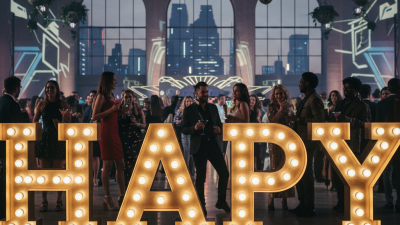
Compare LED Channel Letters with 50,000–100,000-Hour Lifespans (DOE)

2026 Top Marquee Letter Types for Global Buyers

Compare LED Channel Letters with 50,000–100,000-Hour Lifespans (DOE)

In 2026, global buyers are comparing marquee letter types by lifespan, visibility, and maintenance needs. LED channel letters often provide 50,000–100,000 hours of rated operation. DOE-related evaluations commonly use lumen maintenance, such as L70, to estimate useful life. This means the letters may retain about 70% of their initial brightness. It does not promise failure-free operation.

Real installations are less predictable. Heat, moisture, voltage changes, and poor ventilation can shorten service life. A letter mounted above a hot storefront may age faster than one installed in a shaded shopping arcade. Quality aluminum returns, sealed wiring, and even LED spacing help maintain consistent illumination. Small details matter.

They really do.

Global buyers should request test documents, operating-temperature ranges, ingress protection details, and replacement procedures. A 100,000-hour claim deserves careful questions about testing conditions and brightness standards. The number alone can sound impressive, but it may hide practical limitations. I would not compare suppliers using lifespan figures only. Some installations still need cleaning, transformer checks, or occasional module replacement. That inconvenient fact is often missed during early planning. A careful specification should also consider local climate, mounting height, service access, and the visual effect required after several years.

Assess Aluminum, Acrylic, and Stainless Steel Using ISO 9223

For 2026 marquee lettering, ISO 9223 offers a practical way to judge atmospheric corrosion risk. The standard ranks environments from C1, very low, to CX, extreme. It uses first-year corrosion rates and site exposure data. Coastal salt, humidity, pollution, and temperature cycles can quickly move a project into C4 or C5 conditions. NACE’s IMPACT study estimated global corrosion costs at about 3.4% of global GDP, showing why material selection deserves early attention.

Aluminum performs well in many urban settings because its oxide layer protects the surface. However, salt deposits can stain edges, joints, and cut letters. Stainless steel usually provides stronger resistance, especially with suitable grades and clean fabrication. Yet fingerprints, welding discoloration, and trapped moisture still create weak points. Acrylic does not rust, so ISO 9223 does not classify it like metals. Its real risks include ultraviolet yellowing, cracking, and seal failure. That difference is often overlooked. Not all letters age equally.

Tips: Record local humidity, chloride exposure, and pollution before choosing materials. Compare the site with ISO 9223 categories, then inspect samples outdoors for several months. Use sealed backs, drained channels, and compatible fasteners. A polished finish may look excellent, but it can reveal scratches more clearly. The wrong assumption is simple: “corrosion-free” never means maintenance-free.

Check UL 48, EN 50107-1, and IEC 60598-1 Compliance

For front-lit, halo-lit, and LED neon-style marquee letters, compliance starts with the electrical design, not the cabinet shape. UL 48 addresses electric signs, including wiring, grounding, enclosure construction, temperature, and shock protection. EN 50107-1 focuses on electrical installations for luminous-tube and discharge signs, especially insulation and high-voltage protection. IEC 60598-1 adds broader luminaire requirements, including creepage distances, abnormal operation, mechanical strength, and thermal safety. Paperwork is not performance.

Energy use also deserves attention. The United Nations Environment Programme’s 2022 Global Status Report states that buildings consumed about 34% of global energy and produced roughly 37% of energy-related carbon emissions. Efficient LED modules can reduce operating demand, but poor ventilation may shorten their service life. The U.S. Department of Energy’s 2023 Solid-State Lighting R&D Plan identifies efficacy, thermal control, and reliability as continuing technical priorities. Buyers should request test reports, wiring diagrams, ingress ratings, material specifications, and temperature test results for each letter type. A certificate covering one configuration may not cover another. That detail is often missed. Procurement teams should also verify local installation rules, because UL, EN, and IEC compliance does not automatically replace national requirements. I would avoid selecting letters by brightness alone. Uniform illumination, accessible maintenance, sealed connections, and documented component traceability matter just as much. Some specifications look complete but leave power supplies, mounting hardware, or field wiring unclear. Those gaps deserve a second review.

Rank Global Suppliers by IP65 Protection, MOQ, Lead Time, and Warranty

2026 Top Marquee Letter Types for Global Buyers

Global buyers should rank marquee letter suppliers by protection, order size, speed, and warranty, not appearance alone. IP65 means protection from dust and water jets under IEC 60529. It does not guarantee flood resistance. For outdoor projects, stainless-steel returns, sealed LEDs, drainage paths, and tested power supplies matter.

A practical 2026 ranking places Tier A suppliers first for verified IP65 testing, flexible MOQs, 15–25 day lead times, and warranties of three years or more. Tier B suppliers often offer similar letter depth, but require higher MOQs and deliver within 25–40 days. Tier C suppliers may provide lower prices, yet their IP claims can rely on factory statements rather than independent test records. That difference becomes visible after heavy rain. The global digital signage market is projected to expand strongly through 2029, according to the MarketsandMarkets Digital Signage Market report, increasing pressure on production capacity and delivery planning.

Tips: Request an IEC 60529 test report, sample photos of sealed modules, and a written warranty. Ask whether the warranty covers labor and shipping. Also confirm voltage, color consistency, carton protection, and replacement-part availability. A supplier promising seven-day delivery may exclude tooling and inspection time. That should raise questions. Energy performance also deserves attention; U.S. Department of Energy solid-state lighting reports show that thermal management affects LED life and efficiency. In practice, our ranking should remain provisional. Factory audits, seasonal congestion, and imperfect packaging can change the result.